Meet the people
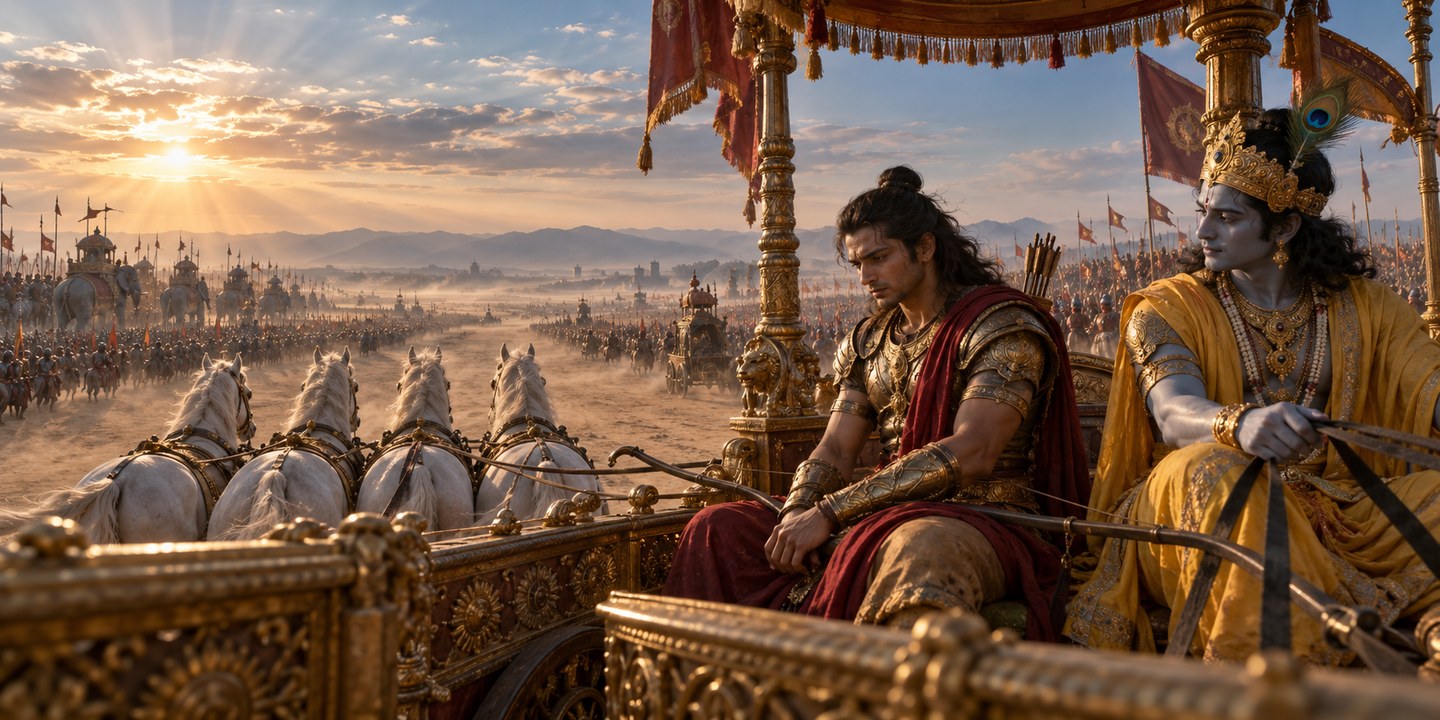
Look around imagined cinematic environments. Compare Arjuna, Krishna, Karna, Draupadi and Bhishma, alongside an authored ordinary soldier's viewpoint.
07 · Epics & ideas
Inside the Mahabharata.
Before the first arrow, what would you ask when your responsibilities conflict?
Five chapters · eight encounters · immersive imagery, 3D models and optional narration · headphones recommended
An epic you can enter
Look around imagined cinematic environments. Compare Arjuna, Krishna, Karna, Draupadi and Bhishma, alongside an authored ordinary soldier's viewpoint.
Change a 3D map from kinship to allegiance. Reveal a birth relationship and explore why belonging and loyalty need not coincide.
Turn the gates of an illustrative formation. Enter, lose the return route, repair it and compare what changes when support is part of the plan.
Five chapters · eight encounters
Optional narration, a responsive original soundscape, an interactive diagram view and a journal saved on your device. No specialist knowledge needed.
Retelling & interpretation
An artistic, interactive retelling of Mahabharata traditions. Visuals are imagined; narration is interpretive paraphrase. The formation and what-if activities are teaching models. Scholarly and cultural review pending.
Photorealistic cinematic panoramas and portraits accompany real-time 3D learning models. The people are imagined rendered images. The formation is a teaching analogy; it is not a reconstructed Chakravyuha.
Reference locations: 1.26–47, 2.7, 2.47–48 and 18.63. Compare translations and commentaries.
Reference books: Adi, Sabha, Udyoga, Bhishma and Drona Parvas. Older translation; numbering and wording differ by edition.
A scholarly edition, not the only living form of the epic. Regional, devotional and performance traditions also matter.
Related films
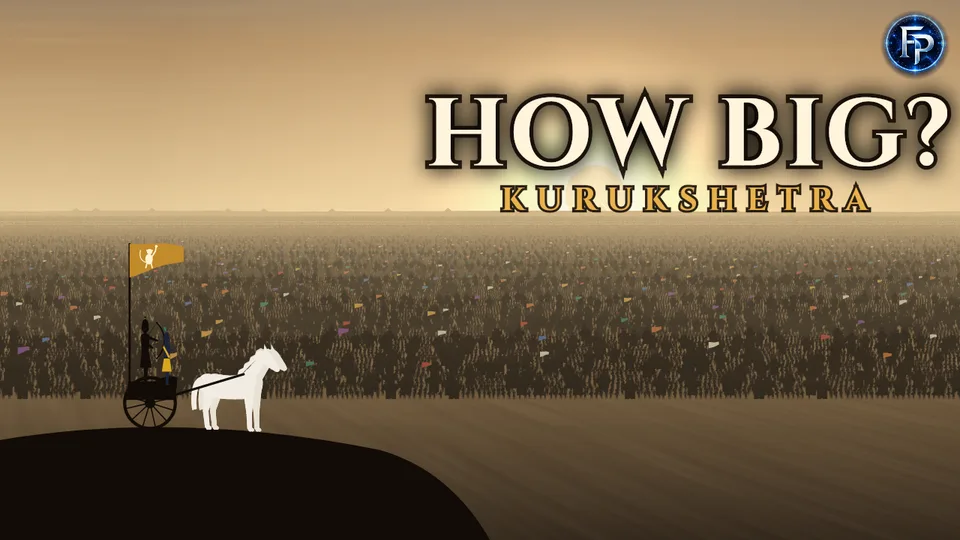 13:36
First Principles · History
The Mahabharata's war from one ordinary soldier's point of view, with evidence and imagination labelled apart.
Coming to YouTube
Related experiences